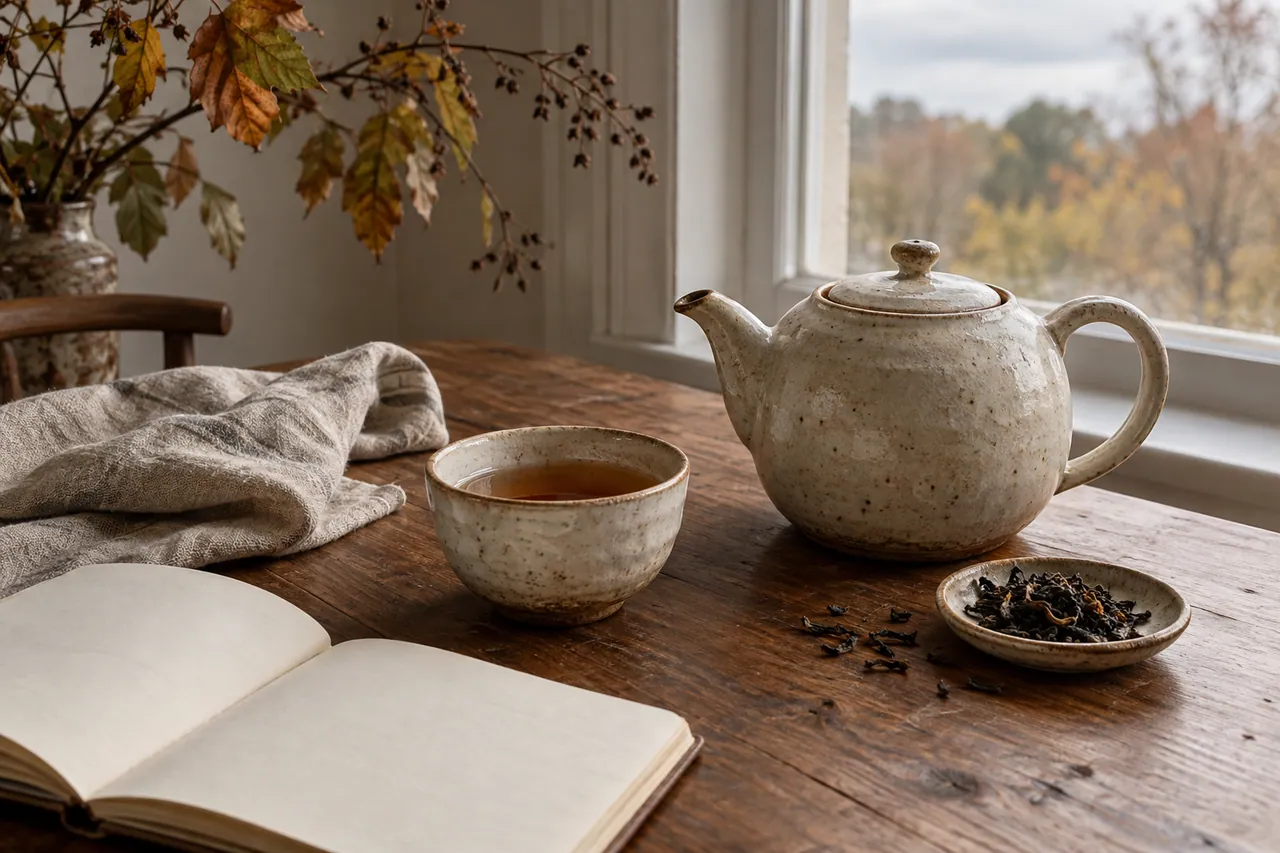
Open a cupboard full of cups and your hand will probably choose one before you have made a decision. Perhaps it is the weight, the handle, the colour, or simply the fact that it was there on a good morning.
A favourite cup is not necessarily the most beautiful one you own. Often it is the one that asks the least of you. It fits where your fingers expect it to fit. You know how far to fill it. It has become part of the making.
Notice what your hand notices
A wide handle can be comfortable when a cup is full and hot. A thick wall holds warmth differently from fine porcelain. A broad opening lets the tea cool more quickly; a narrower shape keeps the aroma close.
None of these qualities is universally better. The small cup that works for a quiet pot of loose-leaf tea may be frustrating when you need one generous mug before a train. Start with the way you actually drink.
Choose for use, not display
Before buying another cup, spend a week noticing the ones already in the cupboard. Which is easy to wash? Which stays balanced when you set it down? Which one do you lend to a guest without thinking?
If you do decide to buy, look for a comfortable rim, a stable base, and enough room for your usual drink. Ask whether handmade ceramics are suitable for food use and how they should be cared for. An attractive glaze is not, by itself, a promise that a vessel suits every purpose.
Would you still choose it on an ordinary Tuesday, when nobody is looking?
Let familiarity do its work
A useful object earns affection through repetition. It does not need a story at the beginning. The story arrives through use: a move, a long conversation, a kitchen that has since changed, a season when you made the same tea every afternoon.
Care for the cups you keep. Retire any with a sharp chip or a crack that makes them unsafe. And leave some space in the cupboard. Having room to reach for what you love is a small luxury of its own.